


 русский
 Español
 Français
Home / News / Industry News / Solvent-borne Dispersants vs Water-borne Dispersants: Which Dispersant Is Best for Your Coating Formulation
Industry News

Content
Solvent-borne Dispersants are specialized chemical products where the continuous phase is an organic solvent system. These molecules typically contain both lipophilic and hydrophilic groups that enable effective pigment stabilization. In the coating industry, Solvent-borne Dispersants are extensively used in industrial coatings, automotive finishes, and high-performance paint systems. They function by reducing the surface tension of pigment particles, allowing uniform dispersion throughout the organic solvent medium and preventing pigment agglomeration and settling. This dispersion mechanism provides superior storage stability and long-term paint performance.
Water-borne Dispersants are defined as dispersing agents where water serves as the primary continuous medium. These molecules contain multiple hydrophilic groups that stabilize pigments in aqueous environments. Water-borne Dispersants function through physical adsorption and electrostatic mechanisms to maintain uniform pigment dispersion in water-based systems. Compared to Solvent-borne Dispersants, water-borne alternatives demonstrate superior environmental performance and compliance with VOC emission regulations and modern sustainability standards.
Solvent-borne Dispersants exhibit excellent compatibility with various organic solvents including benzene derivatives, ester solvents, and ketone solvents. This superior compatibility enables rapid dissolution and dispersion, enhancing coating application properties. Water-borne Dispersants demonstrate compatibility primarily with water as the continuous phase. However, their performance diminishes when water-based coatings incorporate higher proportions of organic solvents. This fundamental difference directly influences paint formulation design and determines appropriate application fields.
Solvent-borne Dispersants create adsorbed layers on pigment surfaces, reducing surface energy and achieving exceptional long-term suspension stability. This stabilization mechanism performs reliably in organic solvent systems even under harsh conditions including temperature extremes and extended storage periods. Water-borne Dispersants depend on electrostatic repulsion to maintain dispersion stability, which proves more sensitive to environmental factors including pH and ionic strength. Under identical conditions, Solvent-borne Dispersants systems exhibit slower pigment settling rates and superior anti-flooding properties.
Paint films formulated with Solvent-borne Dispersants demonstrate higher hardness and abrasion resistance. This superiority results from the optimal film-forming environment provided by organic solvent systems. Solvent-borne Dispersants effectively control pigment distribution uniformity, increasing paint film density and durability. Rapid solvent evaporation produces quick-drying films with stable long-term properties. Water-borne Dispersants formulations, despite superior environmental profiles, produce paint films with relatively lower hardness and abrasion resistance—an inherent limitation of aqueous systems.
Solvent-borne Dispersants primarily serve applications demanding high paint film performance: automotive coatings, heavy-duty anti-corrosion systems, and aerospace finishes. These demanding applications require exceptional film hardness, weather resistance, and wear performance. Water-borne Dispersants focus on environmentally-conscious applications including architectural coatings, consumer paints, and interior finishes. As environmental regulations intensify globally, water-borne Dispersants applications expand continuously. However, Solvent-borne Dispersants maintain dominant market positions in high-performance coating segments.
Solvent-borne Dispersants carry relatively higher production costs due to complex synthesis procedures and expensive high-quality organic solvents. However, superior dispersion performance and stability allow reduced dosages in paint formulations, ultimately lowering comprehensive product costs. Water-borne Dispersants feature lower raw material costs but require higher usage levels to achieve equivalent dispersion performance, which in certain applications increases overall product costs compared to Solvent-borne alternatives.
Strengthening global environmental standards impose increasingly strict VOC emission limits on Solvent-borne Dispersants. This regulatory pressure drives coating manufacturers toward water-borne Dispersants systems. Nevertheless, Solvent-borne Dispersants maintain clear advantages in high-performance applications, with new low-VOC variants continuously entering the market. Simultaneously, water-borne Dispersants technology advances significantly, progressively narrowing performance gaps with traditional Solvent-borne systems.
Different pigment categories demonstrate varying compatibility with Solvent-borne Dispersants and water-borne Dispersants. Inorganic pigments typically show good compatibility with both dispersant types. However, high-strength organic pigments disperse more effectively with Solvent-borne Dispersants. Pearl and effect pigments impose strictest environmental requirements, with the majority of applications relying on Solvent-borne Dispersants to achieve ideal dispersion states and optical effects.
Global coating markets currently feature coexistence of both Solvent-borne Dispersants and water-borne Dispersants technologies. In developed nations including Europe and America, water-borne Dispersants applications exceed 50% market share, yet Solvent-borne Dispersants maintain critical importance in premium applications. In China, environmental policy intensification and industrial upgrading drive increasing water-borne Dispersants adoption annually, though Solvent-borne Dispersants market demand remains robust, particularly in automotive manufacturing and heavy-duty anti-corrosion coating sectors.
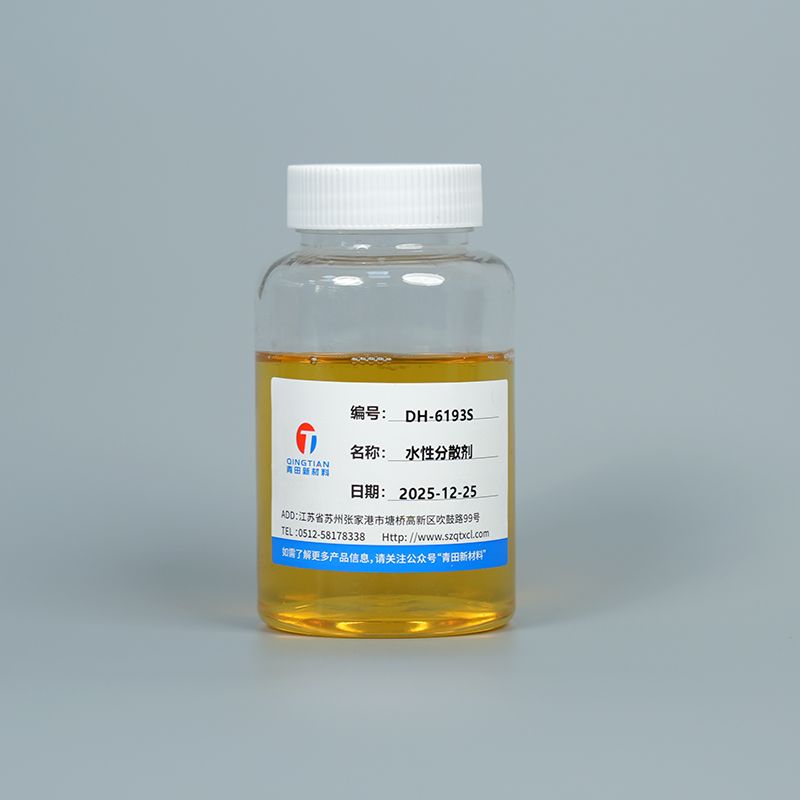
 Wholesale Paint/ Coating Additives Manufacturers
Custom Industrial Chemical Solutions Suppliers
Wholesale Paint/ Coating Additives Manufacturers
Custom Industrial Chemical Solutions Suppliers